
Understanding reforestation and its core objectives
Reforestation is the intentional regeneration of forests where they have been depleted or damaged. It can begin with reforestation, letting forests regenerate, or agroforestry—a combination of both crops and trees. Reforestation is not a one-size-fits-all endeavor. The fundamental objective is to restore previously deforested or degraded forest regions. The planners review why the forest was lost — was it from illegal logging, wildfires, pests, or drought — and then select the most effective way to restore it.
A reforestation project generally proceeds in three defined stages. First by making a preparatory cut to help the best trees produce more seeds. Then comes a stand cut which provides those seeds better chance to make it to the ground and stout. Finally, overgrown big trees that hog too much light and food are felled so that young seedlings can grow with less struggle for room. These actions assist forests return in a manner that suits local demands and goals, whether that’s for animals, lumber, or resilient soil.
There’s two primary methods of initiating new forests. Natural regeneration allows forests to recover on their own if sufficient seed or rootstock remains, typically in cases of less serious harm. Artificial regeneration means folks get their hands dirty by planting seeds or seedlings, or even dropping seed bombs from planes in inaccessible locations. There’s a time and a place for both. Take reforestation, for instance — in a dense pine forest after a wildfire, nature might be quick enough itself, but on a dry hillside ravaged by generations of farming, actively planting is more dependable.
Forests are habitats for many rare animals and plants, some of which are endemic. When these forests go, so do the species inhabiting them. This is what makes reforestation essential to maintaining biodiversity. It additionally prevents soil erosion and assists the earth in absorbing rainfall. Healthy forests sequester carbon from the atmosphere, combating climate change. Dried wood is roughly half carbon by weight, illustrating how effectively trees sequester it. It can take approximately a decade for soil to rebound from clear-cutting, and as much as 25 years for a mature forest to return to its previous composition and function.
Forests benefit farmers. They stabilize air and water cycles, shade crops, and protect against the harshness of floods and droughts. Reforestation can make farmland and forests co-operate, so they both remain sustainable and healthy in the long run. The species of forest cultivated is subject to variation as well. Others reforest by growing even-aged stands, cutting out the old and letting one new layer rise. Some maintain a variety of tree ages, so that older and younger trees are alongside one another, allowing the forest to recover from storms or pests.
Planting methods and their practical applications
Planting is a fundamental reforestation step, and there are numerous methods to suit different locations, climates, and objectives. They each have advantages and constraints. The table below summarizes a few common planting methods, their benefits, drawbacks, and best-use scenarios.
| Planting method | Advantages | Limitations | Best use cases |
| Direct Seeding | Simple, low cost, less root shock | High seed loss (birds, rodents), uneven take | Degraded lands, large-scale sites |
| Seed Ball Planting | Shields seeds, easy to spread | Variable success, seed predation possible | Grasslands, remote or hard-to-reach |
| Seedling Transplant | Higher survival, quick start | Labor and cost high, root disturbance | Urban projects, small plots, riparian |
| Tube Planting | Good root growth, easy to move/plant | Plastic waste, labor intensive | Farmland, urban, mixed-use patches |
| Delayed Planting | Uses pioneer shade, better microclimate | Takes more time, risk of weed growth | Pastures, areas with strong grass cover |
Direct seeding refers to planting seeds immediately in the soil. It’s most effective on large, open areas such as abandoned farms or territory where labor is scarce. This technique is easy but can waste a ton of seed to birds or mice. Plant the seeds a couple centimeters deep or within a bigger ball to help keep them safe. Black plastic mulch increased tree growth by 30% or more over bare soil. Mixing psyllium husks or guar gum with water in dry places can keep seeds sprouting and alive.
Seed ball planting rolls seeds in clay, compost or other material. This protects them from birds, bugs and wind and allows for easy distribution by hand or aerially. It’s great for rehabilitating prairies or out of the way places. Certain seeds have to be near the surface in order to germinate, and others thrive when buried several centimeters. Knowing which is key for a good stand.
For instance, transplanting seedlings is prevalent in dozens of projects across the globe. Typically, saplings are raised in tiny square tubes, then transplanted by hand to larger cavities. We water and mulch the holes immediately after planting. This technique provides trees with a head-start, with roots and shoots already established, making it nice for urban locations or where quick coverage is necessary. It’s more expensive and more labor intensive.
Tube planting is similar to transplanting except that you use plastic tubes for the roots to grow into. This facilitates transportation and planting of the trees, but it contributes to plastic waste. It works on farms, city patches or even mixed-use land where tap roots must penetrate deeply and powerfully.
Late planting gives pioneer trees a chance to take root first. Waiting two or three years allows them to shade out stubborn pasture grass. This results in a cooler, moister site when seedlings go in, less prone to dry out or overheat. It may slow the project, but it often makes for better results in the long term.
Well, each method requires proper preparation and care. For all., weed control is key, usually accomplished by spraying glyphosate prior to planting. Bare soil can allow new weeds to take over, so mulching after spraying is optimal. Timing is important—plant in the wet season for best survival. Continued attention, such as watering, mulching, and weed inspections, keeps newly planted trees thriving.
Planting has to suit local land use, soil conditions, and labor availability. What succeeds on one farm or forest can fail on another. Selecting the appropriate technique, and aligning it with site requirements, budget, and local expertise, increases the feasibility of successful large-scale reforestation.
Harnessing natural regeneration for ecosystem recovery
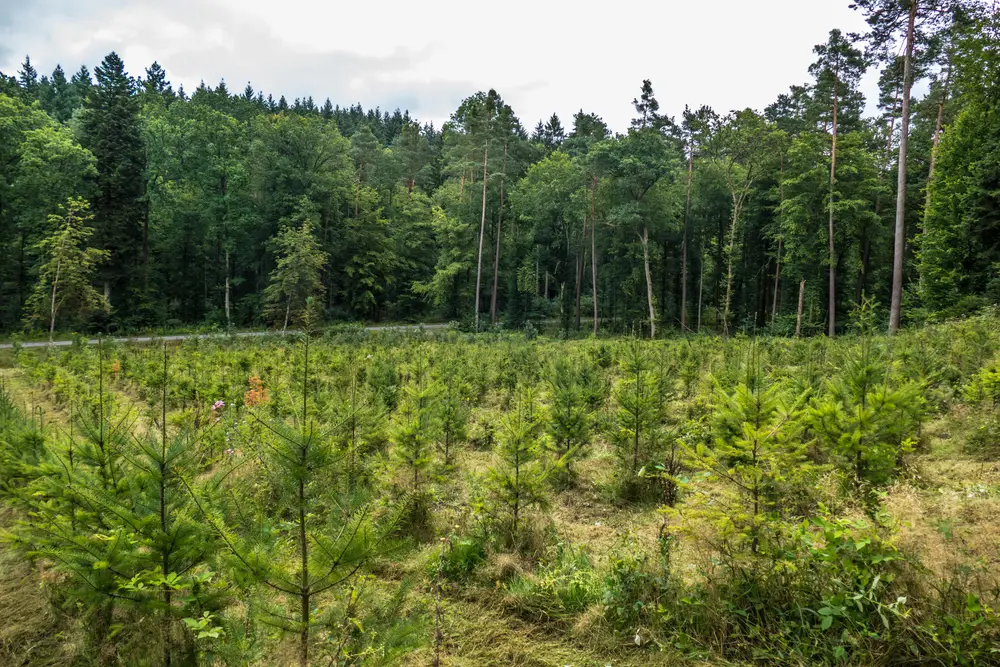
Natural regeneration taps into the land’s own strength to recover and restore forests. This method requires less capital and fewer inputs than manually planting new trees. Indeed, natural regeneration often costs less than 4% of what plantation-style projects require. It doesn’t require massive soil amendments, added fertilizer, or years of daily watering. The soil rests, and native species regenerate naturally. That makes it brilliant for people who desire sustainable yields without a lot of expense or external intervention.
ANR helps accelerate this natural process and gives it a fighting chance. It’s a straightforward technique, but a powerful one. It means safeguarding seedlings from herbivores, installing fences and mowing invasive weeds or grasses. These steps ensure native trees get a fighting chance. ANR is most effective where some seeds or saplings remain – for example in old pastures or logged forests. In certain locations, a mere saving of 6 to 15 seed trees per acre is sufficient to regenerate an entire forest. These remnant trees seed and heal the land. Given sufficient time and a little attention, even cattle pasture can revert to a thriving forest in less than a decade.
Natural regeneration is most valuable where there remains some old forest or seed in the soil. It can even work on ground that appears barren—provided the soil has not been too badly damaged. Often, if we just give up farming or grazing, the land begins to mend itself. There is proof that this works: studies have found that the number of bird species in a regrowing forest can jump from 30 to 68 in just five years. This increased wildlife is connected to greater plant diversity, richer soil and purer water. While young trees need to be planted when there are no seeds or saplings remaining, natural regeneration is often the safer bet when the soil still has some pulse.
ANR compliments cropland and pasture. Maintaining small strips or patches of young forest in or around farms nourishes the soil, restores wildlife, and can even increase crop production over time. Farmers can guard small patches, let trees grow and still farm the rest for crops or cattle. This blend rests the land and cultivates rewards such as shade, cleaner water, and more fertile soil. Those major benefits—such as reduced atmospheric carbon—might not become apparent until 20 or 30 years out, but the initial impacts manifest much faster, in richer soils and fresh wildlife.
Integrating agroforestry into reforestation strategies
Agroforestry integrates trees with crops or livestock. It’s catching on as a powerful way to restore land. It combines reforestation and agriculture, seeking to benefit the planet and the cultivators alike. By interspersing trees and crops, farmers could use their land more efficiently, increase their harvests, and introduce additional streams of revenue. We already see this in practice from Southeast Asia to Central America, in places where food forests and alley cropping are not concepts but actual means to cultivate food and timber while enhancing soil and habitat.
A lot of these agroforestry systems can be integrated into reforestation depending on what the land and people need most. Common systems include:
- Food forests: These mix fruit and nut trees with shrubs, herbs, and ground plants. It looks like a forest in the wild, but it’s producing food and other products for humans.
- Alley cropping: This method grows crops between rows of trees. Because the trees assist with soil shade, water, and nutrients, and the crops can be harvested for either food or sale.
- Silvopasture: This system mixes trees with grazing animals like cows, sheep, or goats. The trees provide shade and food, and the animals contribute manure to the ground.
- Forest farming: Farmers grow high-value crops such as mushrooms, herbs, or spices under a canopy of trees. This is typical in temperate and tropical regions.
- Windbreaks and shelterbelts: Rows of trees or shrubs are planted to shield fields from wind and cut soil loss, while sometimes growing products like nuts or timber.
Agroforestry restoration projects provide both ecological and economic benefits. They allow us to sequester more carbon in the soil, prevent erosion, and restore habitats. For smallholders, these systems can translate into more reliable food and income because they don’t have to rely on a single crop. Often farmers witness improved soil, increased birds and insects, and more robust yields, even in unfavorable weather. Or on large farms, agroforestry can be used to comply with rules on sustainability, to reduce farming costs, and market new products. In Africa, for instance, planting fast-growing trees such as acacia along with crops restores degraded land while providing farmers with wood and food crops.
A few steps matter most in designing an agroforestry system that works. Step one, examine the local climate and soil. Select trees and crops that farm well together and fit the climate and soil. Second, schedule for crops that can satisfy local as well as market demand, so both the food and income are consistent. Third, consider spacing. Trees can’t shade out crops too much, but the mix should help hold water and soil in place. Finally, collaborate with the land’s users. Their requirements and expertise design systems that survive tough times, such as drought or floods, and continue functioning year after year.
Selecting species and designing resilient ecosystems
A strong reforestation project starts with a clear goal. The main objective might be to restore wildlife habitat, boost water supply, or help local economies. This goal shapes every step, from where to plant to which species to pick. Good site assessment is key. Soil type, drainage, and even current crops all play a role. For example, sandy soils might suit drought-tolerant trees, while wetter ground could call for species that thrive with more water. An area next to a farm may need trees that grow well alongside crops, like nitrogen-fixing species.
Selecting species isn’t just about going for fast-growing trees. It means considering how they cooperate. The forest’s successional stage counts as well. So if it’s an open field, seeding pioneer plantings—trees fast to sprout and tolerant of rough patches—may be logical. If the land is a little grown, other species may be more effective. Planted dense “tree islands”—small clusters of many trees in close proximity—can help suppress weeds and grass, allowing forests to rebound more quickly and with less maintenance.
Just as a mixed grill is tastier, a well-mixed planting makes forests resilient. Combining fast-growing pioneer species with slow, long-lived “climax” trees provides both immediate shade and lasting durability. Pioneers such as Acacia or Albizia cover ground quickly and nitrogen fix, enriching the soil for others. Later, hardwoods — think mahogany, oak or teak — can grow beneath their shade and create a resilient, enduring forest.
- Recommended species for diverse, useful systems:. . * Pioneer Trees: Albizia (Asia, Africa), Acacia (Africa, Australia), Leucaena (Americas, Asia) are good for fast canopy and soil fixing.. * Climax Species: Oak (global temperate zones), Dipterocarpus (tropics in Asia), Mahogany (Americas, Africa) are valued for timber and ecosystem support.. * Fruit/Nut Trees: Mango, guava, cacao, chestnut, and walnut provide food and income.. * Agroforestry Trees: Moringa (nutritious leaves), Gliricidia (natural fence, nitrogen-fixer), and Casuarina (windbreaks) work well with crops.. * Medicinal/Multipurpose: Neem (Asia, Africa), moringa, and eucalyptus offer many uses for people and wildlife.
Multi-strata plantings—where trees, shrubs and groundcover are layered—help forests give more back. Edible forest gardens take this concept, combining fruit and nut trees with herbs and root crops. These plantings increase food output, aid pollinators, and provide habitat for animals. They assist soil in retaining water and prevent erosion, preserving the land’s utility for a longer period. In certain areas, they plant dense pockets of trees for quick outcomes, and then thin them as the forest matures. This can be more economical, and it allows communities themselves to get involved, as they witness rapid transformation and receive early yields.
It’s hard to estimate costs for these kinds of projects. It varies according to site size, species selected, and the local needs. Thoughtful planning is required to align objectives, expenditures and ongoing care. Reforestation helps fix water cycles that can maintain rivers and lakes healthy for everyone around.
Monitoring, maintenance, and long-term success factors
Reforestation success by planting trees is contingent on monitoring, maintenance, and long-term success factors. These actions are not just about keeping trees alive in the near term—they are about creating a robust, enduring forest that sustains local fauna, enriches the earth, and provides human benefit for decades.
Periodic monitoring is essential. Teams keep tabs on tree survival, measuring how quickly and how well they grow, and the health of the surrounding land. For instance, they might tally how many seedlings survive the initial rainy season or test for disease and pests. They consider soil quality, water consumption, and the return of native fauna and flora. This aids in detecting problems early, such as insufficient growth in specific areas or surprising weed growth that can strangle saplings. Sometimes, drones and sat images help map advances, while field teams record info on tablets or notebooks. This blend of tech and boots-on-the-ground verification is now prevalent from Brazil’s Atlantic Forest to local initiatives in Southeast Asia.
A simple, transparent checklist enables teams to monitor what needs doing. Typical chores are watering saplings in dry weather, removing weeds that could compete for water and sunlight, pest inspection, and replacing deceased seedlings. In farm country, erecting fences can protect saplings from being stomped or devoured by animals. Every list has actions, such as ‘water every seedling with 5 liters, twice a week’ or ‘weed within 1 meter of every sapling’. That way, nothing slips between the cracks, and it’s always obvious what’s next.
Being organized really helps. Establishing routine intervals for checking and repair—monthly or seasonally, for example—assists you in spreading out the burden and maintaining your forest’s vitality. Local organizations or farm producers who live and work nearby can manage the bulk of this labor. When locals participate, they bring the expertise of the land and a genuine investment in the forest’s thriving. Others employ local young people or collaborate with schools, which not only keeps expenses low, but develops skills in the community.
Adaptive management ties it together. If the data indicates certain trees are not thriving, teams can transition to more resilient varieties, alter their planting methods and timing, or modify their watering techniques. In arid regions, planting drought-resistant trees or mulching to retain moisture may be beneficial. If pests are an issue, they may attempt a diverse planting to make the forest more resistant. If you learn from each season’s results, it makes you wiser and your forests stronger over time.